Your driving test can feel intimidating when you don't know what is going to happen. Knowing the process beforehand can help you arrive more prepared, understand what your examiner is looking for and remain calm throughout your test.
At Sam's Driving Academy, we help learners prepare not only to operate the vehicle, but also to understand the full test-day process — so there are no surprises on the day.
Please note
Test procedures and the order of manoeuvres may differ slightly depending on the Driving Licence Testing Centre (DLTC), vehicle code and examiner.
Before You Leave Home
Prepare everything the night before. Make sure you bring:
- Valid learner's licence
- Original ID / documentation required for identification
- Test booking / appointment confirmation or receipt where applicable
- Any additional documentation requested by the testing centre
Sam's Tip
Don't wait until test morning to look for your documents. Prepare everything the night before.
Arrive at least 15 minutes before your test.
Your Test Day Journey
- Arrive & Check In
- Vehicle Inspection
- Yard Test
- Road Test
- Return to DLTC
- Result
Step 1: Exterior Inspection
Before driving, you will normally be required to demonstrate an exterior inspection of the vehicle. This shows the examiner that you are aware of whether the vehicle is safe and roadworthy before you move off.
Checks may include:
- Tyres and wheels
- Vehicle body
- Windscreen
- Mirrors
- Windscreen wipers
- Lights
- Indicators
- Registration plates
- Fuel cap
- Possible leaks
- General condition of the vehicle
What the examiner is looking for
Vehicle awareness + correct inspection procedure + safety awareness.
Step 2: Interior Inspection
You may be expected to demonstrate knowledge of the controls and safety checks inside the vehicle.
- Seat adjustment
- Mirrors
- Seatbelt
- Gear position
- Parking brake
- Warning lights
- Indicators
- Headlights
- Brake lights
- Windscreen wipers
- Horn
- Steering
- Clutch and brake controls
Sam's Tip
Practise the inspection in the same vehicle you intend using for your test wherever possible. You don't want test day to be the first time you are looking for a particular control.
Step 3: The Yard Test
Once the inspection has been completed, you will begin the prescribed yard manoeuvres.
The order of the manoeuvres can differ. Do not panic if another learner started with a different manoeuvre.
Code B – Commonly Known as Code 8
- Incline start
- Parallel parking – left
- Parallel parking – right
- Alley docking – left
- Alley docking – right
- Turn in the road
Your examiner will tell you where to position the vehicle and which manoeuvre to perform.
Code C1 – Commonly Known as Code 10
- Incline start
- Alley docking (left & right)
- Reverse into a loading bay
- Parallel parking
- Stopping & moving off (loaded/empty)
Code 10 manoeuvres differ from Code 8 — we train each code separately.
Your Observations Matter
Getting the car into the parking bay is only one part of the test. You are also being assessed on your observations throughout every manoeuvre.
- Mirror checks
- Blind-spot checks
- Signalling
- Observation before moving
- Awareness during manoeuvres
- Vehicle control
- Safety
Do not become so focused on the parking that you forget your observations.
What Happens During Parallel Parking?
- Position the vehicle correctly.
- Complete your observations.
- Begin the reverse manoeuvre.
- Continue monitoring your surroundings.
- Correct the vehicle where permitted.
- Finish safely inside the designated area.
You may be allowed a second attempt under the prescribed K53 rules where applicable. Additional corrective movements are limited, so use them wisely.
The Incline Start
You may complete the incline at different stages of the yard test depending on the testing centre or examiner's sequence.
Important skills:
- Clutch control
- Parking brake control
- Observation
- Smooth pull-off
- Preventing the vehicle from rolling backwards
Rolling backwards during the incline can result in the test being terminated.
Is the Yard Test Timed?
The Code B yard test has prescribed timing requirements. Don't let this make you feel that you need to rush.
Work efficiently, but don't rush. Proper observations and vehicle control are more important than trying to complete every manoeuvre as quickly as possible.
Step 4: Going Onto the Road
Passing the yard does not mean the test is finished.
This is where many learners relax too much or become overexcited. Remember to:
- Stay focused
- Continue doing observations
- Listen carefully to instructions
- Do not assume you have passed until the entire test has been completed
The Road Test
The examiner will direct you along the test route. For example:
“Turn left at the next intersection.” “At the stop street, turn right.” “Change lanes when it's safe.”
The examiner provides directions but does not coach you through the drive.
During the road test, you may be assessed on:
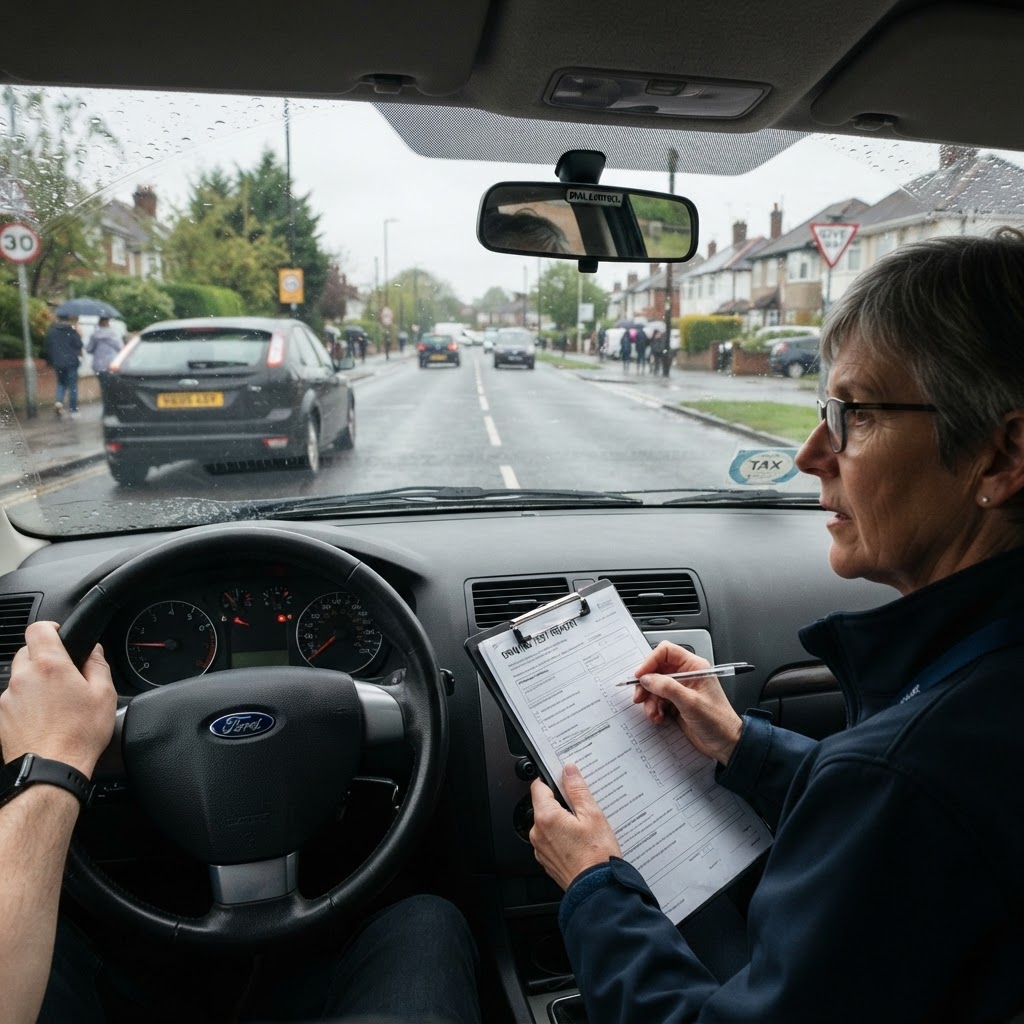
The Examiner Is Writing – Have I Failed?
Not necessarily.
The examiner needs to record observations, mistakes and penalty points throughout the test. Seeing the examiner writing does not automatically mean that you have failed.
Don't watch the examiner's pen. Watch the road.
One mistake should not cause you to mentally give up. Correct yourself, refocus and continue driving unless the examiner tells you the test has ended.
Mistakes That Can End Your Test
Some errors are more serious than ordinary penalty points. Examples can include:
- Dangerous driving
- Losing control of the vehicle
- Rolling where prohibited
- Disobeying traffic signs or signals
- Performing an illegal action
- Creating an unsafe situation
- Collision with another vehicle or object
- Crossing road markings illegally
The exact outcome depends on the circumstances and the applicable K53 assessment rules. Not every minor mistake is an automatic failure.
Pay Special Attention to Intersections
You must constantly demonstrate awareness at intersections:
- Observe before entering intersections
- Identify right of way
- Watch pedestrians
- Watch approaching traffic
- Check mirrors
- Follow road signs
- Obey traffic signals
Traffic Lights
Do not speed up simply because you are worried that the light is about to change. Safety must always come before trying to impress the examiner.
Remember: The Examiner Is Assessing You
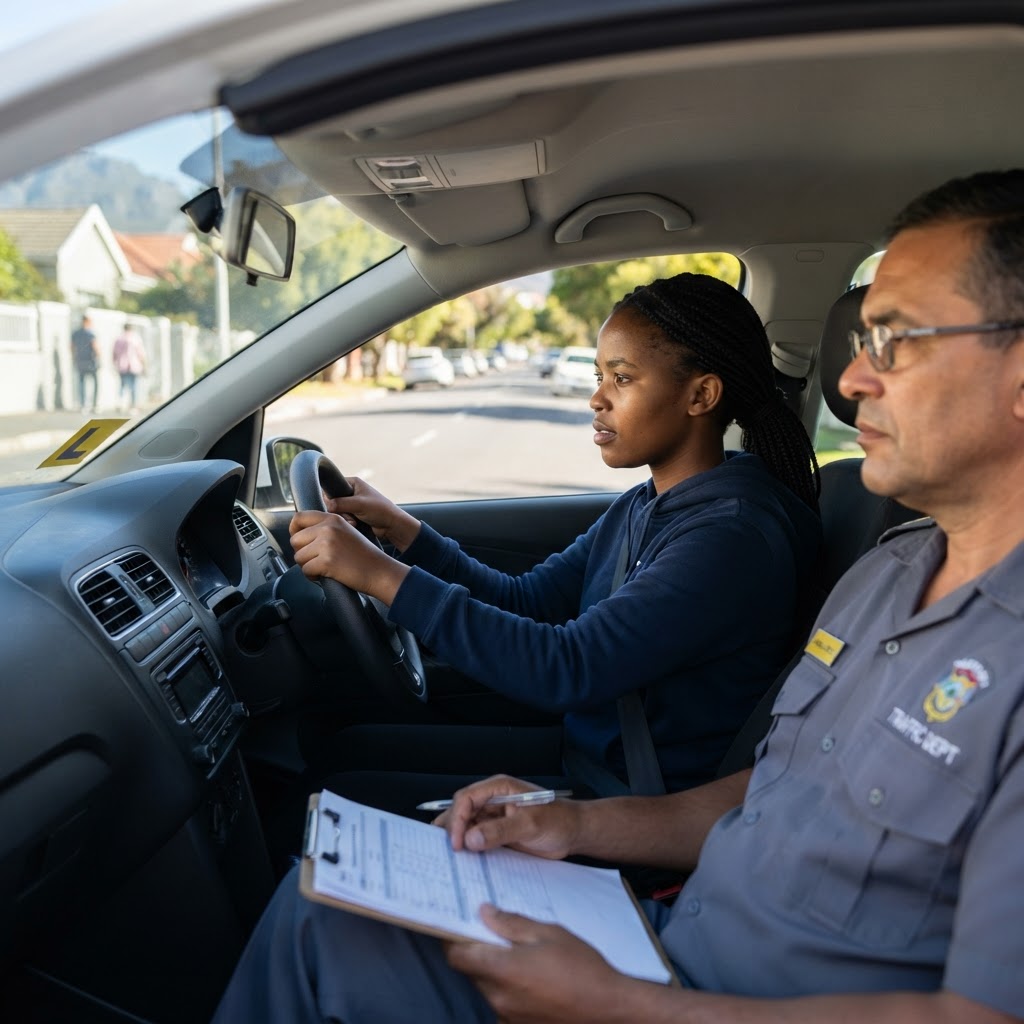
The examiner's job is to determine whether you can operate the vehicle safely and independently. They will make notes throughout the test because that is part of the assessment process.
Your job is not to watch the examiner. Your job is to drive safely.
Step 5: Returning to the Testing Centre
After completing the route, you will return to the Driving Licence Testing Centre. If successful, you will proceed through the applicable administrative process for the issuing of your driving licence or temporary driving licence. The exact administrative steps can differ between DLTCs.
Before Your Driving Test
- Learner's licence ready
- ID ready
- Booking confirmation available
- Arrive early
- Know your vehicle controls
- Remember exterior inspection
- Remember interior inspection
- Practise your observations
- Practise your yard manoeuvres
- Understand road signs
- Practise intersections
- Stay calm
- Listen carefully to the examiner
- Keep driving until the examiner tells you otherwise
Prepare for More Than Just Parking
At Sam's Driving Academy, we don't want learners to simply memorise parking reference points. Our training prepares you to understand:
- What the examiner is assessing
- Proper K53 observations
- Vehicle control
- Yard manoeuvres
- Real-road driving
- Test-route conditions
- Traffic signs
- Intersections
- Test-day pressure
The objective is to produce a learner who is ready for both the test and independent driving after the test.
Driving Test Coming Up?
Don't wait until test day to discover what you don't know.
Already have your test date? Let us know when you're testing so we can help structure your remaining lessons around your test.
Related Articles
 Test Day
Common Mistakes That Fail Your Driving Test
Avoid these frequent errors that catch learners off guard during their driving test. Being aware of them is half the battle won.
 Test Day
K53 Driving Test Checklist – What You Need to Know Before Your Test
Nervous about your K53 driving test? This complete checklist covers what to bring, the yard test steps, road test tips, and the most common mistakes to avoid on test day.