K53 Driving Test Checklist – What You Need to Know Before Your Test
The K53 driving test is one of the most specific standardised assessments in South Africa. It doesn't just test whether you can drive — it tests whether you drive in a very particular, prescribed way. Knowing exactly what's required eliminates most of the nerves. This is your complete checklist.
Why Preparation Beats Nerves
Anxiety on test day comes almost entirely from uncertainty. When you know exactly what to expect, what to bring, and what the examiner is looking for, there's nothing left to fear. The K53 is predictable — use that to your advantage.
What to Bring on Test Day
You must bring: a valid, current learner's licence (expired licences are not accepted — verify your expiry date well in advance), your South African ID document or valid passport, your booking confirmation from the traffic department, and comfortable, closed-toe shoes. Avoid sandals, heavy boots, or heels as they interfere with pedal control.
What We Provide
When you book our test transport service, we provide a roadworthy, familiar training vehicle for the test, your instructor's support and encouragement on the day, and transport to and from the traffic department. You focus on driving — we handle everything else.
The K53 Yard Test – Step by Step
The yard test takes place in the traffic department's designated yard and covers four manoeuvres. Alley docking (reverse parking into a bay): reverse straight and true, staying within the lines, using mirrors and checking over your shoulder. Parallel parking: use your reference points, take it slow, and don't touch the cones. Three-point turn: signal, check mirrors and blind spots, execute cleanly in three movements. Hill start (incline start): find the clutch bite point, release the handbrake, and do not roll back even slightly.
What examiners are watching for: smooth control, proper observations at each step, and clean execution without touching lines or cones. One serious error in the yard is an automatic fail — take your time.
The K53 Road Test – Step by Step
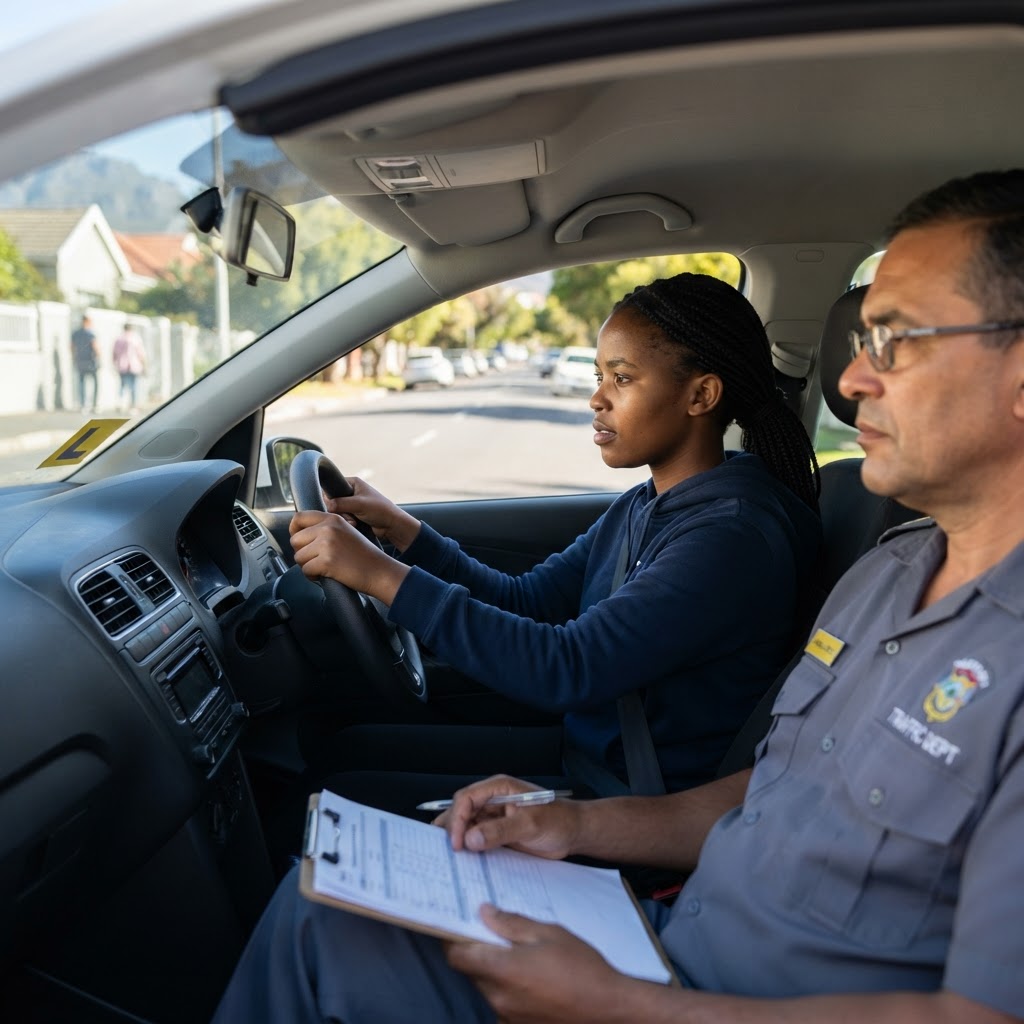
After passing the yard, you'll drive on public roads for 20–30 minutes. The examiner sits in the passenger seat with a clipboard and gives directions. Key behaviours they score: mirror checks before every manoeuvre, blind spot checks at every intersection, proper signalling (at least 5 seconds before turning), correct lane discipline and positioning, following distances (stay 2–3 seconds behind the vehicle ahead), and speed compliance with all signs.
Most Common Mistakes to Avoid
The most frequent reasons learners fail their K53 test are: not checking mirrors — make it obvious, turn your head; forgetting blind spot checks — look over your shoulder before every lane change and at every intersection; going too slow — driving significantly under the speed limit is as penalised as speeding; not stopping fully at stop streets — roll-through stops are an automatic fail; and rolling back on the incline start.
How to Prepare
Practice mock yard tests with your instructor until each manoeuvre is automatic. Use our video tutorial library in the Sam's Academy app to review technique between lessons. On the day itself, take three slow breaths before you start the engine. Read the examiner's instructions carefully before moving. Drive as if every road user is your grandmother — smoothly, observantly, and with full control.
You don't have to face test day alone. At Sam's Driving Academy, we're with you every step of the way — from your first lesson to the moment the examiner hands you your result. Book your lessons today and let's get you ready.
Ready to Start Your Driving Journey?
Book a lesson package today and get on the road with Sam's Driving Academy.
View PackagesRelated Articles
 Test Day
What to Expect on Your Driving Test Day
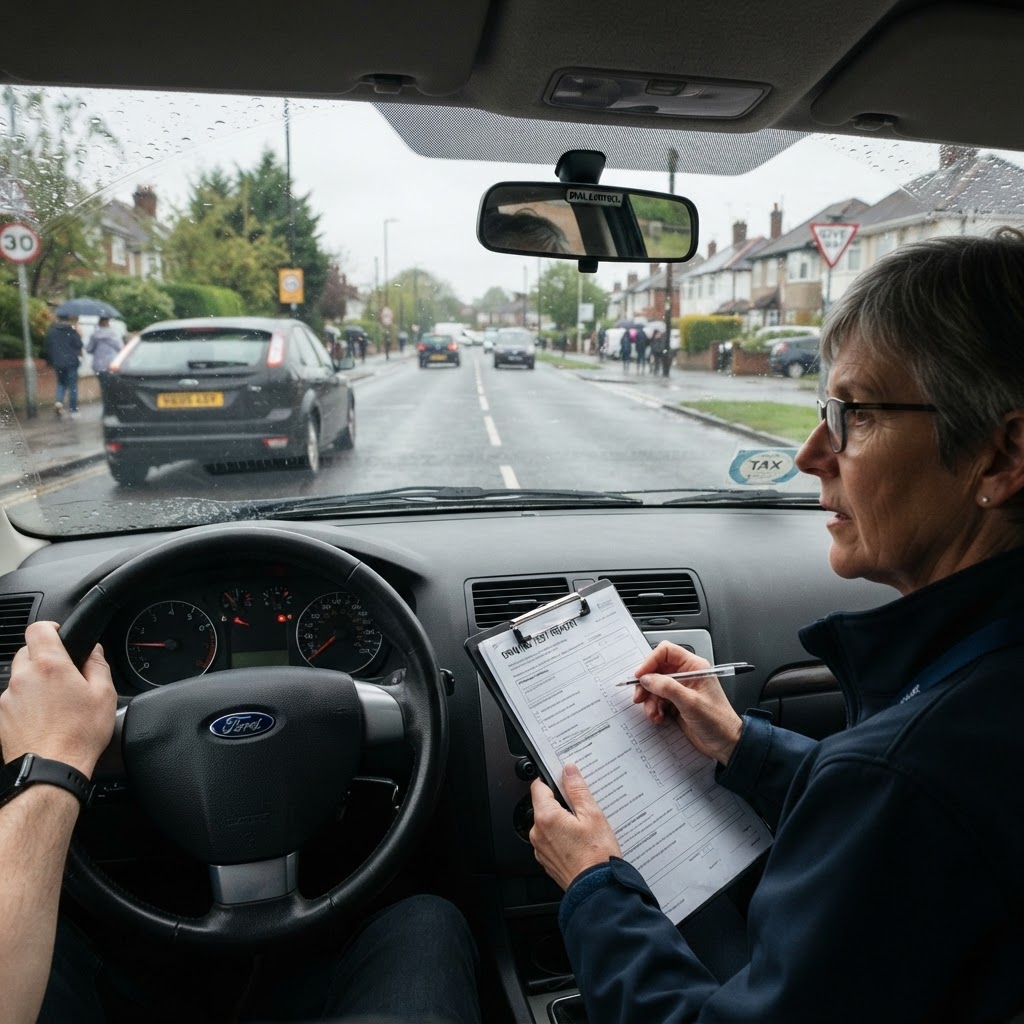
Preparing for your K53 driving test? Learn what happens during the vehicle inspection, yard test and road test, what your examiner checks and how to prepare for test day.
 Test Day
Common Mistakes That Fail Your Driving Test
Avoid these frequent errors that catch learners off guard during their driving test. Being aware of them is half the battle won.